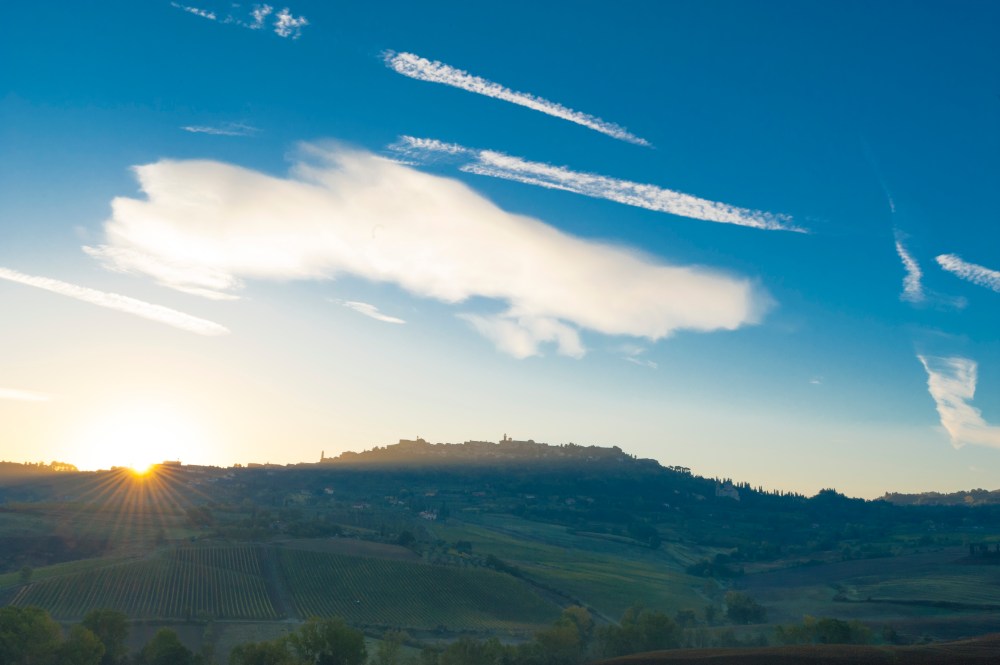
Tuscany is famous for the historic cities of Florence and Siena . A visit to this region should be on everyone’s bucket list to experience fantastic architecture and culture . A cute puppy dies every time a tourist takes pic at leaning tower of Pisa “holding it up” so you may want to pass on Pisa and continue on to Cinque Terre and drink wine by the sea.
After an arduous day of eating and drinking wine , you must gorge yourself on the local specialty, Bistecca alla Fiorentina (Steak Florentine) with a side of porcini mushrooms and bottle of Brunello di Montalcino. The steaks are typically over 3 lbs of marbled beefy goodness. You can also do the “Mad Men” thing and wash it down with a Scotch whisky or, better yet, double fist the wine and the Scotch Whisky cause the Italians should stick to making wine. Whatever you do don’t request how you want your steak to be cooked….it will be done rare for proper Steak Florentine .
Kidding aside, there is science behind this as fatty proteins play nice with the relatively high tannin Tuscan wines
Alas, I digress
Behold the Sangiovese Grape !
This is the most planted grape variety in Italy , and could be generalized as medium body and relatively high acidity and tannin . Much of the sangiovese form the DOC and DOCG producers will vinify sangiovese in earthy rustic style .
Food with wine concept
I often hear discount Italian wines with statements such as “Italian wines are sour” . I generally just think of my safe space when I hear this, since it’s socially unacceptable to slap someone for making inaccurate comments.
I appreciate peoples taste differ but you need to open your mind and give sangiovese wines a chance to win your heart and taste buds
Quick story : just sitting around drinking Chianti Classico and Southern Rhone blend with friends. One commented he can’t understand what I like about Italian wines as he preferred the Rhone blend . I suggested that the next time he has pasta tomato based sauce to pick up the same Chianti Classico . Fast forward month later and I received text that said simply “I get the Chianti now” .
Chianti ( Chianti Classico DOCG and Rufina DOCG )
We often think of Chianti in the cheap straw wrapped “fiasco” bottle when when Tuscan wine is mentioned . In reality Chianti producers rarely use this bottle, and top Chiantis can set you back in excess of $50
From the great map from Wine Folly , one can see that the Chianti region is quite large ( between Florence and Siena ) and is made up of 7 distinct sub regions, the the 8th Chianti Classico a stand alone region

For a first foray on what this region has to offer, you cannot go wrong diving head first into any Chianti Classico DOCG . Often considered the top Chiantis with the Rufina DOCG comming in close behind . Rufina DOCG should not be confused with Ruffino , the producer .
The great thing with Italian wine laws is that to be a Chianti Classi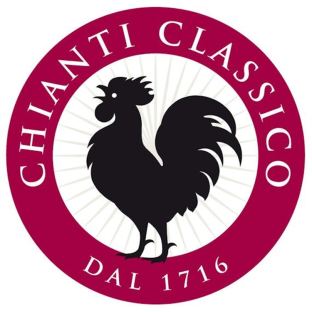 co you must follow very specific rules ( must be 75%-100% Sangiovese , minimum 7 months in oak , total 10 months, min12% ABV etc )
They make it easy for consumers , even ones who have had a few wobbly pops already but since they have unique seal on the neck in the form of Black Rooster
Heck, you don’t even have to read the label ! If you see a the Black Rooster just buy the darn thing.
If you find you like these sangiovese dominant wine of this style, you then can explore all 8 regions of this gem of Tuscany
You shouldn’t have to spend more than $15-20 USD for good bottle
Chianti Summary
The cheap Chianti of the 70’s and 80’s have thankfully gone away along with parachute pants and stinky hippies
Pick up a bottle of Chianti Classico ( perhaps splurge on Riserva which denotes 24 months aging prior to release ) , and go to town a steak or tomato pasta and make a toast the the Florentine knight who’s legends gave rise to the Black Rooster used in the Chianti Classico seal
For those who have weak google Fu , follow this link
Brunello di Montalcino DOCG / Vino Nobilie di Montepulciano DOCG
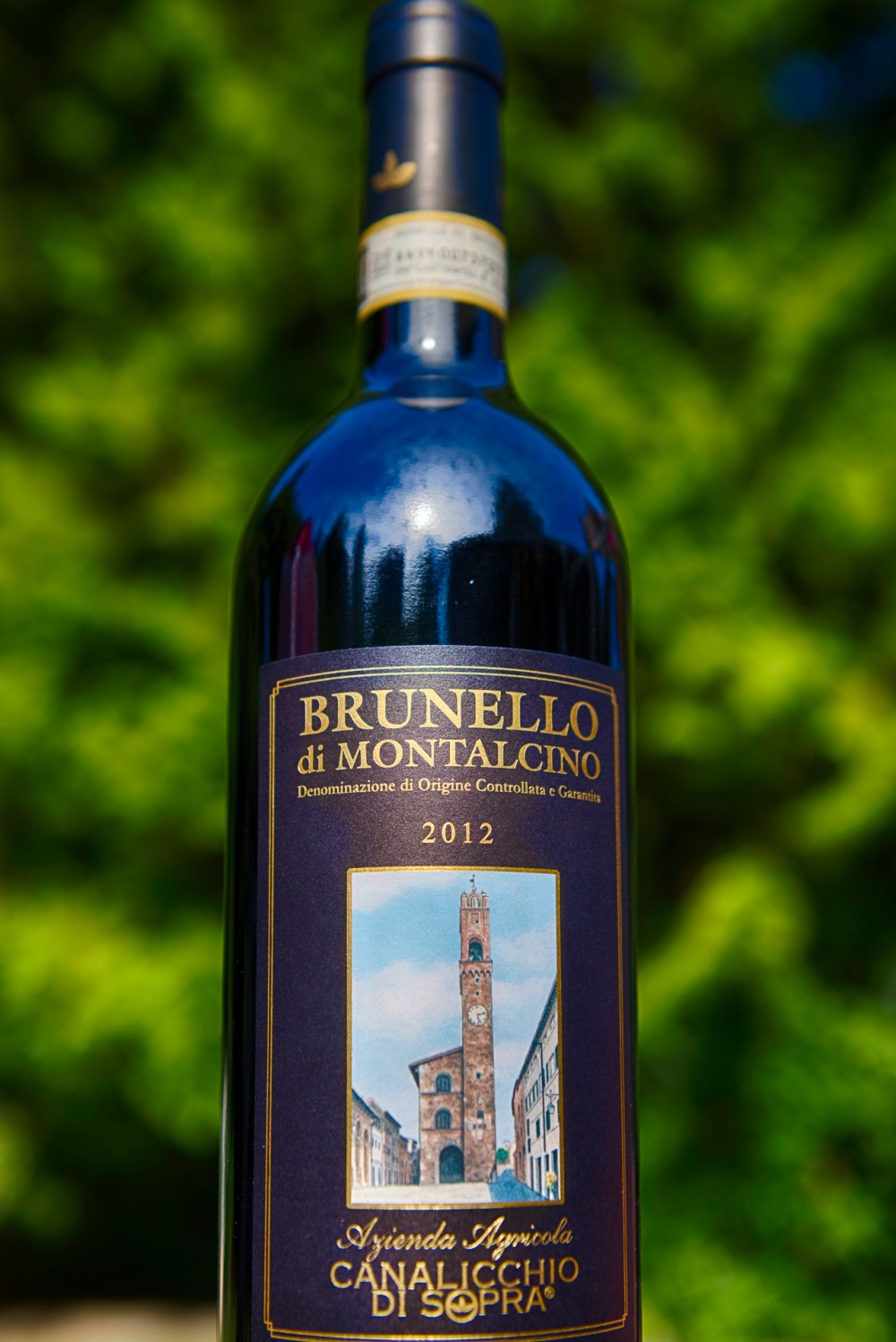
Brunello di Montalcino is often considered the King of Italian wines ( other King is Barolo ) Brunellos are Sangiovese varietals ( no other grape allowed to be blended ) so this is Tuscany’s Sangiovese in purest form
Brunello by regulation must aged 5 years ( min 2years in oak ) after before release . 6 years to earn the “Riserva”
This would be considered a young Brunello at this point . I have a personal rule where I would cellar for at least 2 more years . Ideal age would be 5 years after release . The stark reality is most people are not patient enough to cellar and forget, and that it would be cost prohibitive to purchase a old Brunello in restaurant.
That being said, I have never had a bad Brunello, so if you want to drink upon release , have at it ! You will just note see the full potential that this DOCG has to offer
Vino Nobilie di Montepulciano not only a Badass name, it offers a fantastic alternative to the more spendy Brunello . Although Vino Nobilie di Montepulciano DOCG rules state minimum 70% sangiovese , most current producers use 100% . Age in cask is 2 years, 3 for Riserva
Do not confuse Vino Nobilie di Montepulciano DOCG with Montepulciano grape which is used in Montepulciano D’Abruzzo DOC ( central east coast region of Italy )
Having stayed in Agriturismo overlooking Montepulciano, I have a soft spot for this DOCG . I find for non special occasion ( where you would pull out the big guns of Brunello ) , the Vino Nobilie di Montepulciano is fantastic alternative . Best of all, unlike Brunellos, they can be enjoyed young
Ken’s word of wisdom – get off the couch and just go buy Vino Nobilie di Montepulciano . Great way to indulge yourself in one of the finest the Sangiovese has to offfer
The fine example form Avignonesi is actually a bargain
Bargoon Alternatives
I love finding wines that are 95% as awesome as their high end famous brother for the bargain prices
Like when the Lion King is held up for all the Jungle inhabitants to behold….all Hail Rosso di Montalcino & Rosso di Montepulciano . Bit anti-climatic when you realize it just means Red Wine from Montalcino and Montepulciano . But fear not, the Wine Police ( who live inside of my head…yeah dating myself here ) ensure that the DOC of Rosso di Montalcino and DOC Rosso di Montepulciano must meet , as their bigger DOCG brothers , stringent requirements
Typically Rosso version from the same vineyard and producer as the Brunello / Vino Nobile counterpart. They only require 1 year of aging so many producers will release early and declassify the Brunello / Vino Nobile into the Rosso DOC
Although these early releases will not have the long term age ability , the benefit is they are often easier drinking ( less tannic for example ) at young age
The nerdy engineer in me has driven me to prove this through side by side evaluation of Brunello and the Rosso from same producer
Good choice would be the fantastic examples form Altesino
Altesino Brunello di Montalcino
The readily available Castello Banfii Brunello and their Rosso di Montalcino would also be interesting comparision
Castello Banfi Montalcino Wines


On numerous occasions I along with my fellow hooligans would be hard pressed to justify the additional $20-30 for the Brunello version. In all fairness, the Brunello was bit young ( typically 2 years after release )
So logical conclusion would be, go break open that piggy bank or return the giant pile of empties and pick up a Brunello for Cellar and spend all the rest of the $$ on Rosso di Montalcino and Rosso di Montepulciano . You should be able to find bottle for $20USD
Brunello di Montalcino / Vino Nobilie di Montepulciano Summary
Bucket list wines for special occasions that represents Sangiovese varietal wine at its finest. You really shouldn’t drink Brunello young ( at least hold for min 2-3 years….5 ideally ) . The Vino Nobile you can get away with a year or too
For drinking now to see what this style and DOCGS have to offer , go for the DOC Rosso versions
Super Tuscan and Bordeaux Blends
DOC / DOCGs in Tuscany are very restrictive . Example, Brunello must be 100% Sangiovese . Chianti ( 75% Sangiovese , with up to 10% Canaiolo and up to 20% of any other approved red grape variety )
The Italians realized that the Cheese Eating Surrender Monkeys in France’s Bordeaux region may know a thing or two about blending Cabernet Sauvignon and Merlot
The blending of non-indigenous Bordeux grapes ( Merlot / Cabernet Sauvignon ) can make for an interesting wine. Also in this IGT classification are Syrah and other non-indigenous grapes
Since as soon as non indigenous grapes are blended, they do not fall into any DOCG / DOC are therefore must be labeled Tuscan IGT ( a catch all designation ) . Notable exception if Carmignano DOCG . Recall Italian wine pyramid where the 3 tier below DOCG and DOC is IGT . Confusing as it may be, may producers vinify fantastic wines from indigenous ( Sangiovese ) and non indigenous ( Cabernet Sauvignon, Merlot, Syrah , Cabernet Franc ) despite being lowly 3rd tier IGT
The most sought after examples of this are the Super Tuscans
One forerunner for this is Tignanello . Problem is they typically command over $100 a bottle which I simply cannot afford .
Fortunately there are lots of producers that offer Toscana IGT wines with prices ranging from $15 to $50 USD so there’s something for every budget.
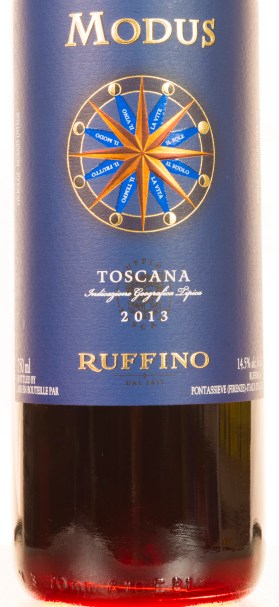 One of my favorite Toscana IGTs is the Modus from Ruffino. It’s a Sangiovese, Merlot and Cabernet Sauvignon blend and when Italy meets France the outcome is sublime. One might say “Mio Dio”, non indigenous French grapes mixing with Tuscany’s most revered Sangiovese! The vintners at Ruffino have done a fantastic job showcasing the intermarriage of a traditional Tuscan grape and a classic Bordeux blend.
The rules for a Toscana IGT are less restrictive when it comes to grape variety, compositon percentages and age before release. The result is a flavor and style profile that is all over the place, and just one of Italy’s little minefields. I have had most of the Toscana IGT wines that are available locally and some were fantastic but others were meh. This is in stark contrast to wines within a particular DOCG or DOC where the flavour and style profiles will be similar. If you have a favorite wine within one of those classifications you should enjoy it regardless of the vintner.
Carmignano DOCG
Since we are talking about Italy’s Bordeaux style blends, there is the wonderful Carmignano DOCG. These wines have been made by blending Sangiovese grapes and Cabernet Sauvignon grapes for generations, and long before the recent advent of Super Tuscans.
The Carmignano DOCG rules require a minimum of 50% Sangiovese grapes and 10-20% Cabernet Sauvignon grapes with the remaining 30% -40% coming from Cabernet Franc and others.
Like most DOCG wines , especially ones that have been optimized through blending, the Carmignano wines are excellent. Since it’s a relatively unknown DOCG, there are bargains to be had, with prices between $15 and $20 USD, but you may not be able to find them in your locale. If you are lucky and can find one, pick it up and enjoy this non-traditional specialty. How boring would life be if we didn’t go off on a tangent once in a while?
Tuscan Blends Summary
Tuscan blends tend to have lower acidity and tannin than the Sangiovese dominant wines. This tends to make them easier to drink without food but who really wants to drink without something great to eat?
If you don’t like the relatively high tannin and acidity of many wines you should give the some Tuscan blends a try.
 Barley and Vine
2 Comments Add yours