Southern Rhône Red AOC’s
Much of this post will discuss in detail the specific wine AOC / AOPs of the Southern Rhône. The AOP / AOC wine classifications were discussed in a previous Barley and Vine post .
French Wine Classification in the Rhone
The map below is from the Rhône Wine website which is run by the professional organization of wine growers and merchants in the Rhône Valley. For the technically challenged among us their site is easy peasy. It provides everything you ever wanted to know about all things Rhône wine, and then some, but if you want the Coles notes, or Cliffs notes for you South of the 49th, version read on!

Côtes du Rhône AOC
More than 48% , 2016 red wine production figures, of the Rhône wine production falls under the Côtes du Rhône AOC classification. 171 communes produce wine under this classification….that’s a lot of municipalities as we refer to them that are in the business of wine making ! In the Rhone valley the Côtes du Rhône AOC is the entry-level and the production rules are pretty simple. The blend requires a minimum of 40% Grenache grapes, at least 15% Syrah and Mourvedre grapes, in any combination. The balance, if any, can be made up of other allowable grapes which are too numerous to mention and they’re all required to have a minimum alcohol by volume (ABV) of 11%. The growing area is ginormous, with over 32000 hectares under vine. In 2016 production was over 190 million bottles, most of them pretty delish, and sadly I didn’t drink nearly my share! Côtes du Rhône AOC wines are readily available here and even better, many of them can be had for $7 – $10 USD! Bonus!
Côtes du Rhône Villages AOC
The next jump up from Côte du Rhône AOC is Côte du Rhône Villages. The production rules for these wines require a minimum of 50% Grenache grapes, at least 20% Syrah and Mourvedre grapes in any combination. The balance, if any, can be made up of the same allowable grapes as in the AOC wines. The minimum ABV required in the Villages wines is 12%. Paying attention to the label is always important when choosing a wine, especially if you have already been imbibing, as you might not notice the addition of the word “Villages” and end up without the wine you were after! Under the classification rules, the “Villages” designation can only be used if the wine meets a higher standard. The higher quality of a “Villages” wine is in part a result of the AOC production rule that limits the yield to ~45 hectoliters of wine per hectare of vines. As the vines are less dense, the quality of the grapes is higher forcing the growers to focus on quality. The basic Côte du Rhône AOC discussed above allows up to 60 hectoliters per hectare which is a significant difference in density.
At first glance you might think the wines below are identical, since the producer and logo are the same, but the addition of the world “Villages” means it’s a step up from the basic Côte du Rhône.
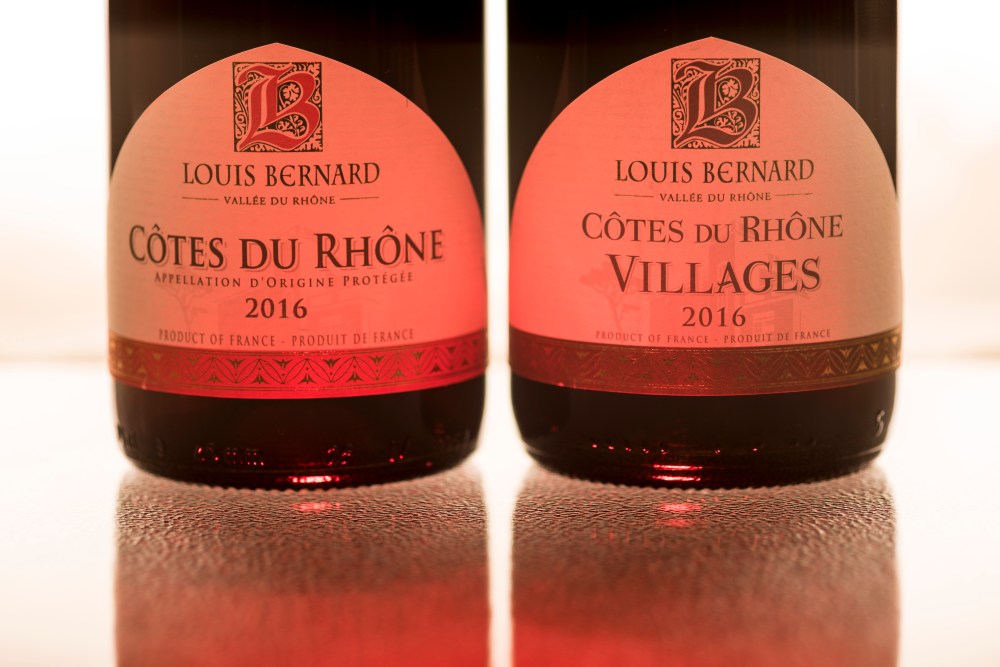
These wines are also readily available in North America in the $10USD to $15USD range but you can expect to pay a premium for the higher quality “Villages” wine. The premium can vary but in this example it’s $2 USD. I have had some mediocre Côte du Rhône AOC over the years, but for the most part, all the Côtes du Rhône Villages have been enjoyable.
Côtes du Rhône Villages “Named Village” AOC
In addition to the regular “Villages” wines, there are a number of communes, or municipalities as we call them, that have consistently produced higher quality wines earning them the right to put their actual commune name along with “Côtes du Rhône Village “. There are 16 communes that have earned this honor and the following link has information on all of them.
Of course because we are talking about France, these named villages must have their own production rules too! The North American market demands a $10- $15USD basic Côtes du Rhône or Côtes du Rhône Village and the aficionados jump straight to a Rhône Cru so , skipping the named village wines entirely. The reason for this is that many of the available “named village” wines have reached the price of the some of the less expensive Crus like Rasteau AOC or Vacqueyras AOC. Importers understand this so what we typically see here is the Côtes du Rhône Villages and the Crus. As the poor “named village” wines are so scarce here, they have become more expensive than the entry level crus, and just get lost in the weeds.
After many hours of hunting around, I did come across a couple of named village Côtes du Rhône Village wines locally. You can see the village names, Valréas and Séguret, very prominently displayed on the labels. These named village wines are definitely as scarce here as a NRA hat at the Democratic National Convention.

AOC Séguret dictates a minimum of 70% Grenache and 20% Syrah and Mourvedre together. A typical Rhône GSM Blend would have 100% GSM grapes but up to 10% of the blend can come from other allowable grapes. In the tradition of many Rhône AOC’s, the village wines often have the coat of arms of their village embossed on the bottle.
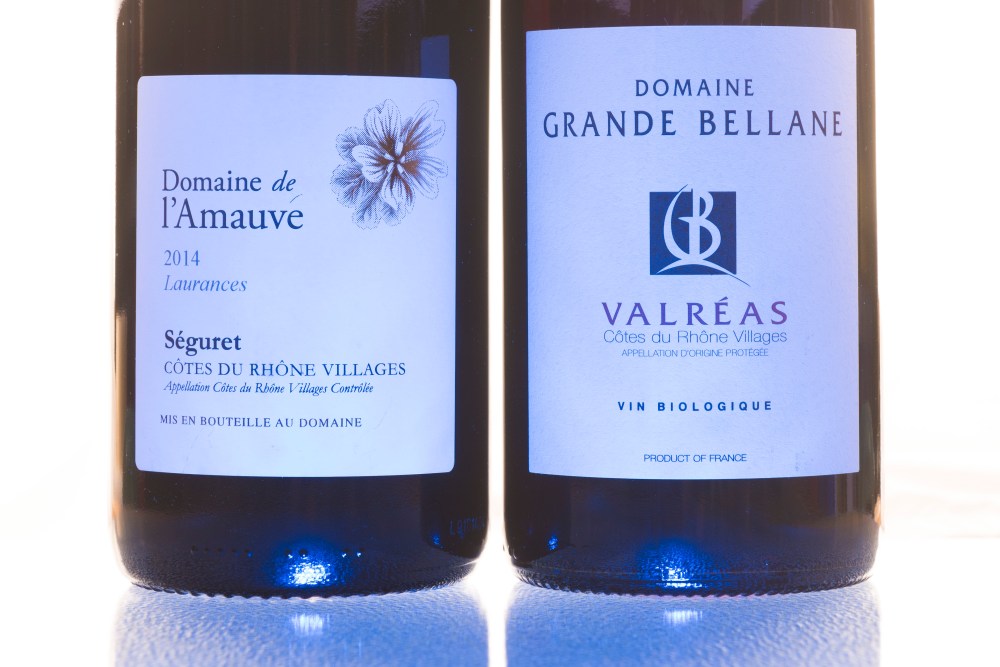
AOC Valréas requires a minimum of 50% Grenache and a minimum 20% Syrah and Mourvedre together but up to 30% of the blend can come from other allowable grapes.
The lovely town of Valréas has an intriguing history. It has another name, “L’enclave des Papes” which comes from the time of the Avignon Papacy. Pope John XXII, a sickly fellow, tasted the wine from Valréas and felt so strongly that it helped restore his health he purchased the town! Nobody gets an endorsement like that these days………..
I’m happy to report that the named village wines are readily available in the Rhône at a great price! Time to book your ticket?
Southern Rhône Cru
The Southern Rhône Crus are the poster child for the Southern Rhône where the Grenache, Syrah and Mourvedre grapes are affectionately known as the Holy Trinity of the Rhone wine blend. With exception of Châteauneuf-du-Pape, the wines produced there are typically GSM blends but allowable percentage of each grape varies depending on the Cru’s AOC. Although it was the French that came up with this blend, it was the Australians that made it famous around the globe.
Cairanne AOC
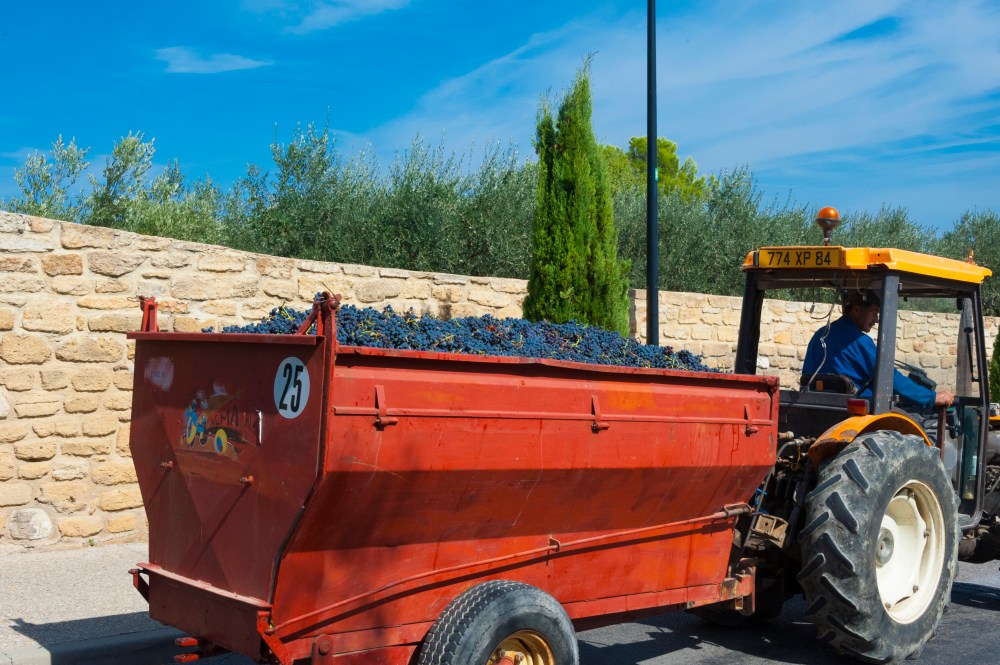
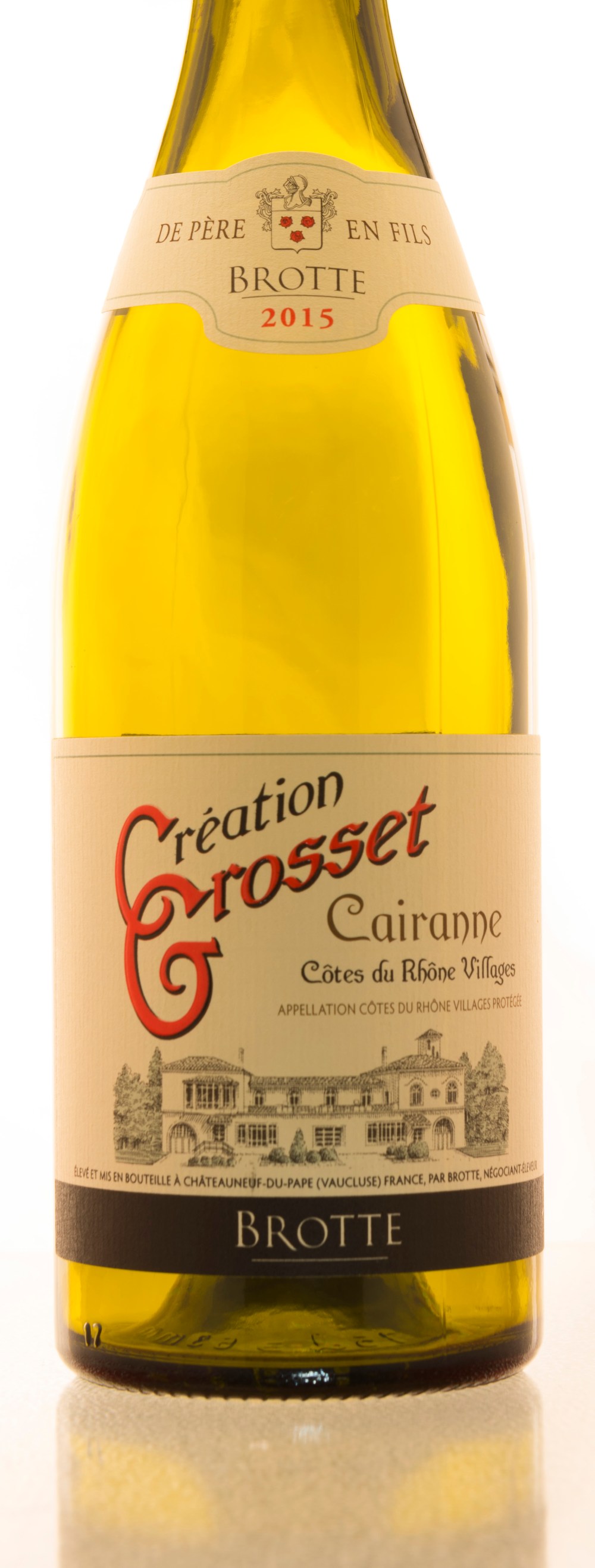
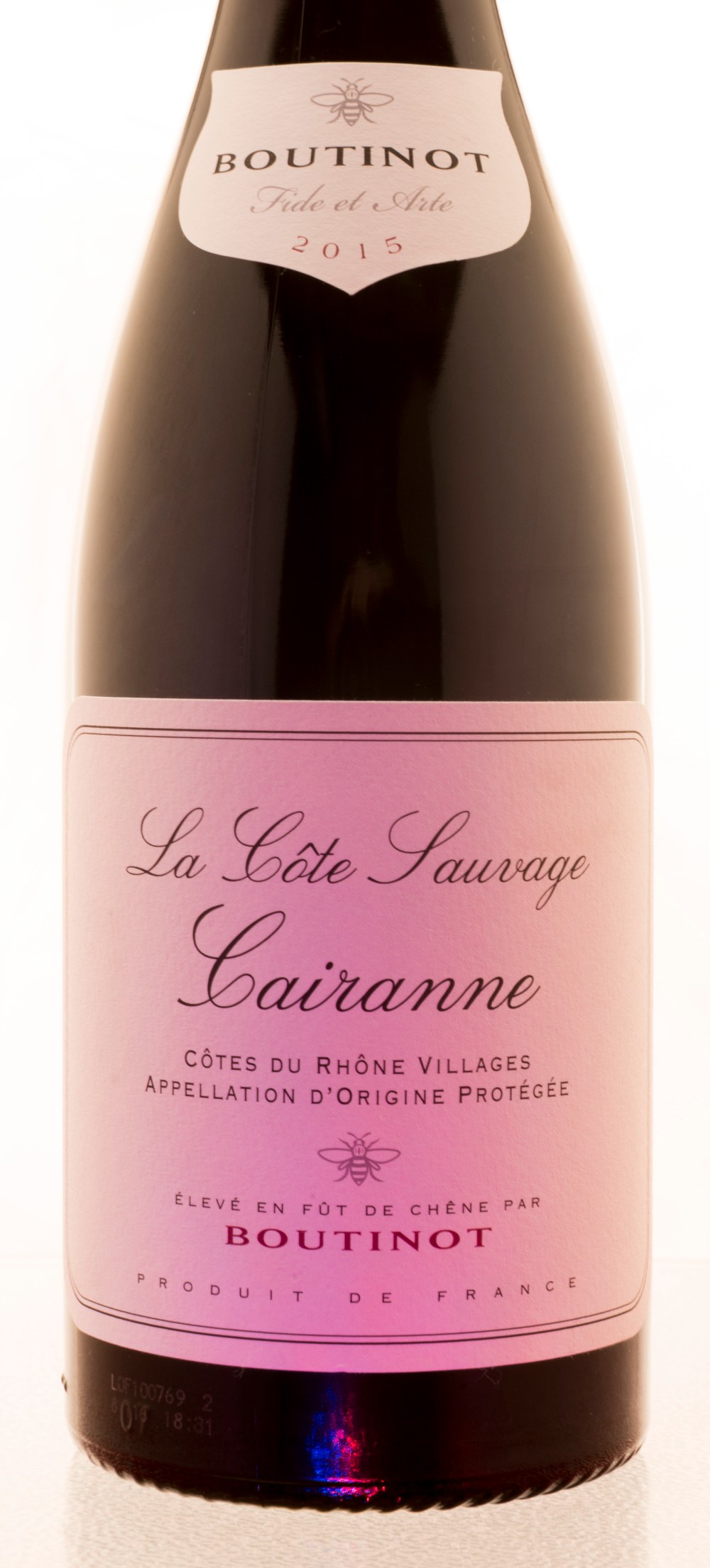
The Cairanne AOC red wines were elevated to Cru status in 2016. The blend is a minimum of 50% Grenache and 20-50% Syrah and Mourvedre, a classic GSM blend.
As Cairanne’s status was only recently elevated, and the wines are not released for a couple of years, the 2015 vintage we see here still has the old label, “Cairanne Côtes du Rhône Village”.
Today Cairanne is a quaint little village that lives and dies by the vine. This is even reflected in the name of the local church, Notre-Dame-des-Vignes or Our Lady of the Vines, which is a pretty good indicator of the importance of winemaking to the local economy. In the 12th century Cairanne was better known as a base for the Knights Templar so it went through a period of rapid fortification which is still apparent today.
This Cru can typically be found in the $15USD to $30USD range and many of the ones under $20USD are excellent.
Châteauneuf-du-Pape AOC
Châteauneuf-du-Pape AOC is easily the most famous and considered the best Southern Rhône wine appellation by many. It is interesting to note that there are a total of 13 red and white grapes permitted in a Châteauneuf-du-Pape red blend. Typically not all are used in most wines, but still a stark contrast to most blends around the world, which don’t typically use more than 3 grape varieties. There can be a huge variation in the taste profile of a Châteauneuf-du-Pape due to the large variety of grapes permitted in the blend.
The backbone of these wines is usually the Grenache grape but some are Mourvedre grape dominant. When the Mourvedre grape is the more dominant, the wine tends to have a higher tannin level so needs more cellar time.
The productions rules for Châteauneuf-du-Pape require a minimum ABV of 12.5% and all producers must discard a minimum of 2% of the grape yield which ensures only the best grapes are used.
You will find a good selection of Châteauneuf-du-Pape at your local wine store due to its world renowned reputation. It’s definitely a special occasion wine since prices range from $45USD to $200USD.
In my opinion Châteauneuf-du-Pape is better bought as a gift as most wine drinkers will recognize the name and appreciate that it cost a lot. For my own enjoyment of a Southern Rhone Cru there is much better value in a Gigondas AOC or Lirac AOC!
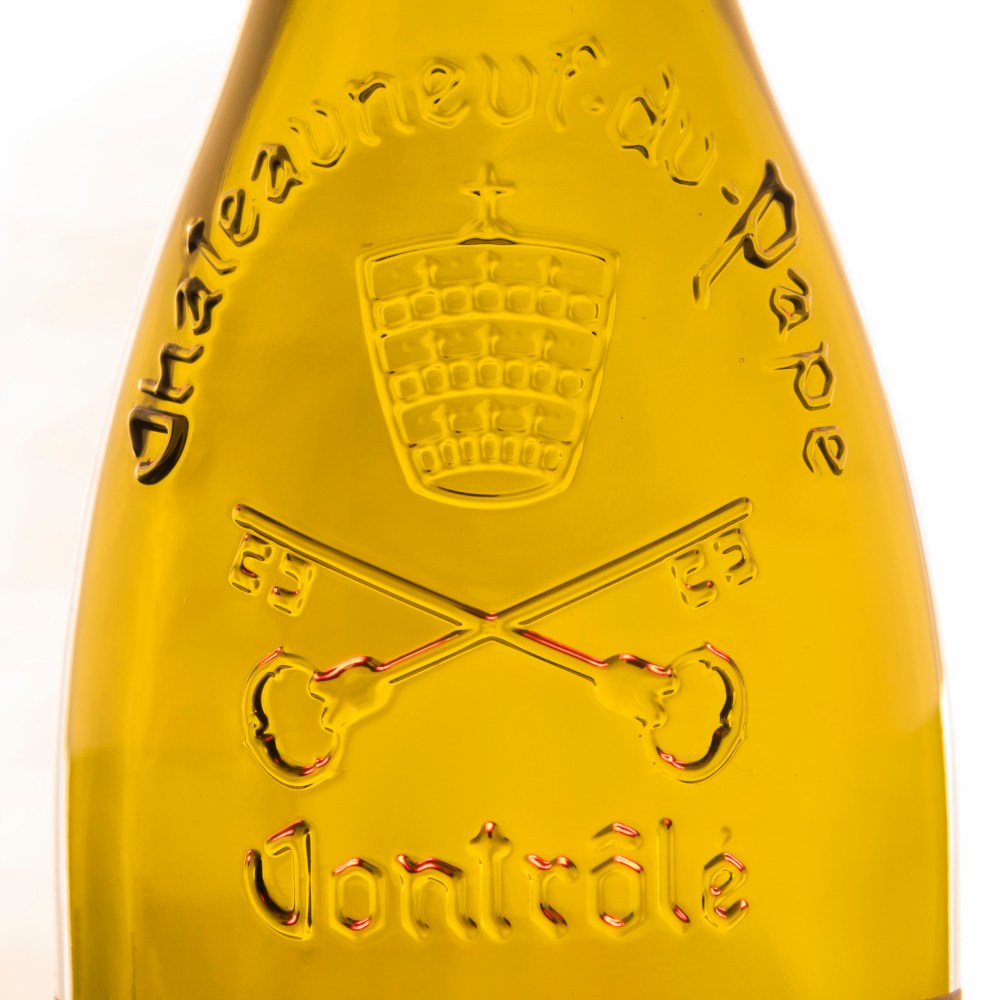
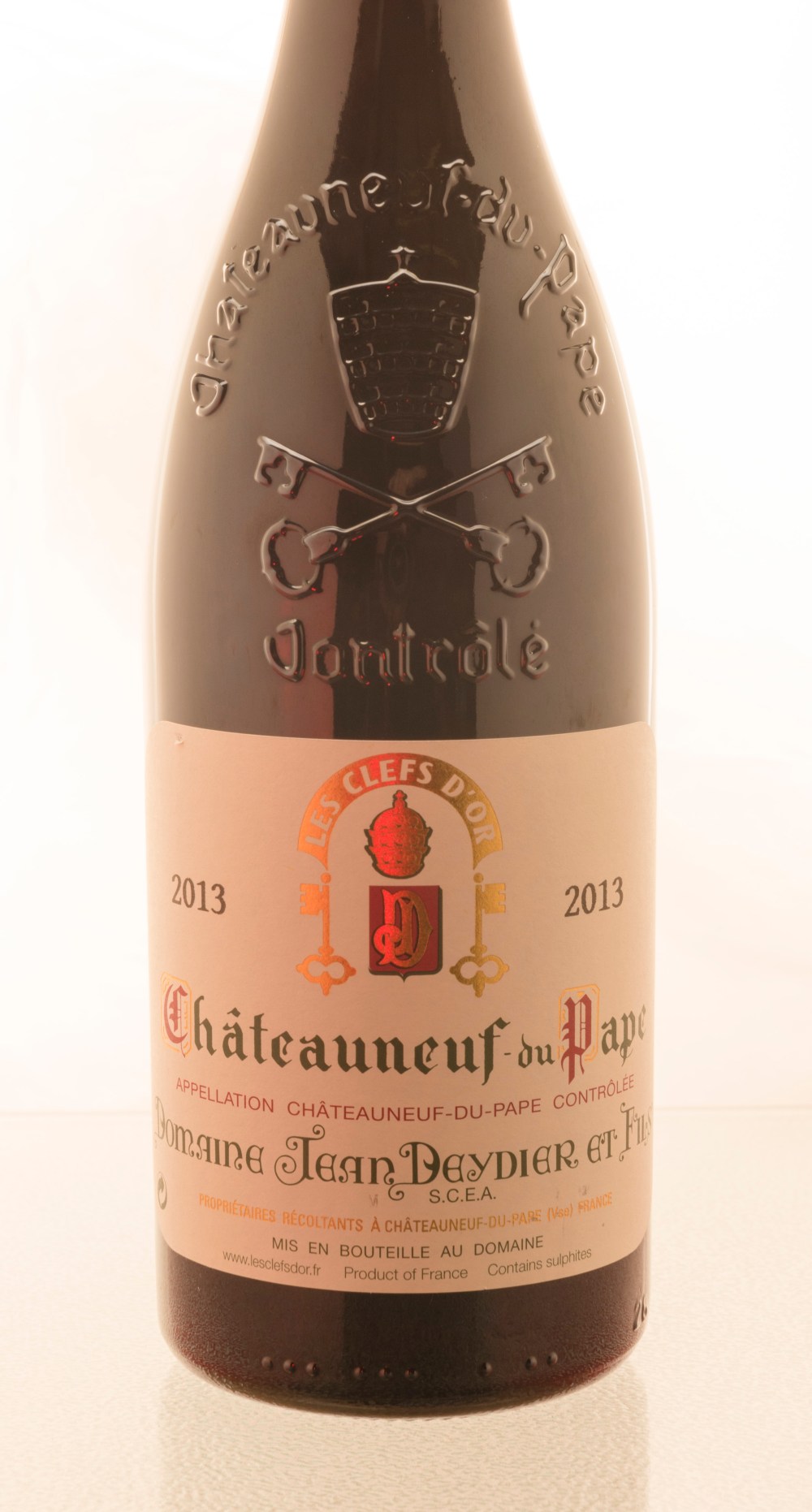
Châteauneuf-du-Pape, which means ” New Castle of the Pope ” sounds a lot more sophisticated than the Hood of the Pointy Hat Homie. Its name comes from the early 1300’s when the Roman Catholic Church moved the Papacy from Rome to Avignon, not far from Châteauneuf-du-Pape. Seven Popes would reign in Avignon, before the return to Rome in 1376, but it was the second one, Pope John XXII, who built a castle in Châteauneuf-du-Pape for his residence. You can see a depiction of the castle, now in ruins, on the label of the bottle below. Another little detail of interest is that most bottles of Châteauneuf-du-Pape are embossed with the Key’s of Saint Peter and a Papal Crest. The Supreme Court in France ruled that this world renowned symbol embossed on the bottle can only be used for wine from the Châteauneuf-du-Pape AOC. Does brand recognition get any better than that??? In the picture below the bottle is empty, how sad, and is back-lit.
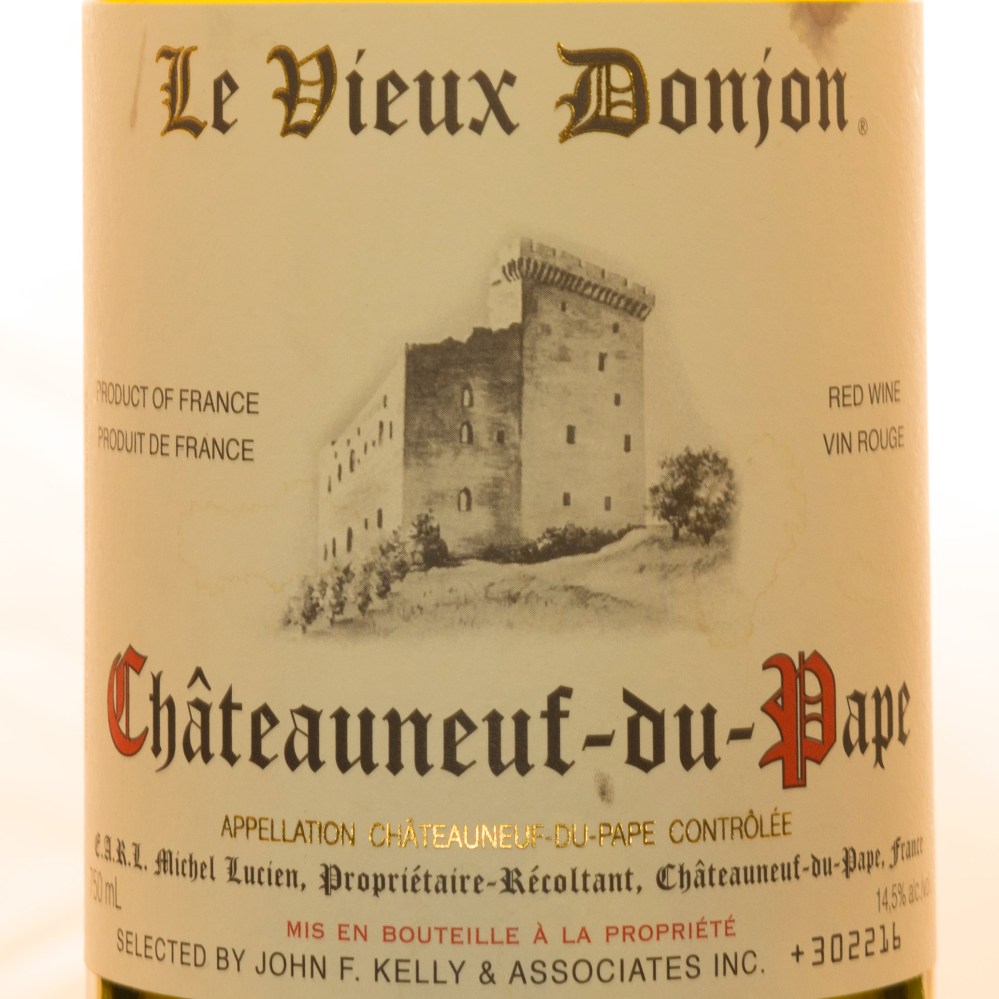
The symbol is actually much more discrete on the shelf and this one is still full for my future enjoyment! Anybody in???
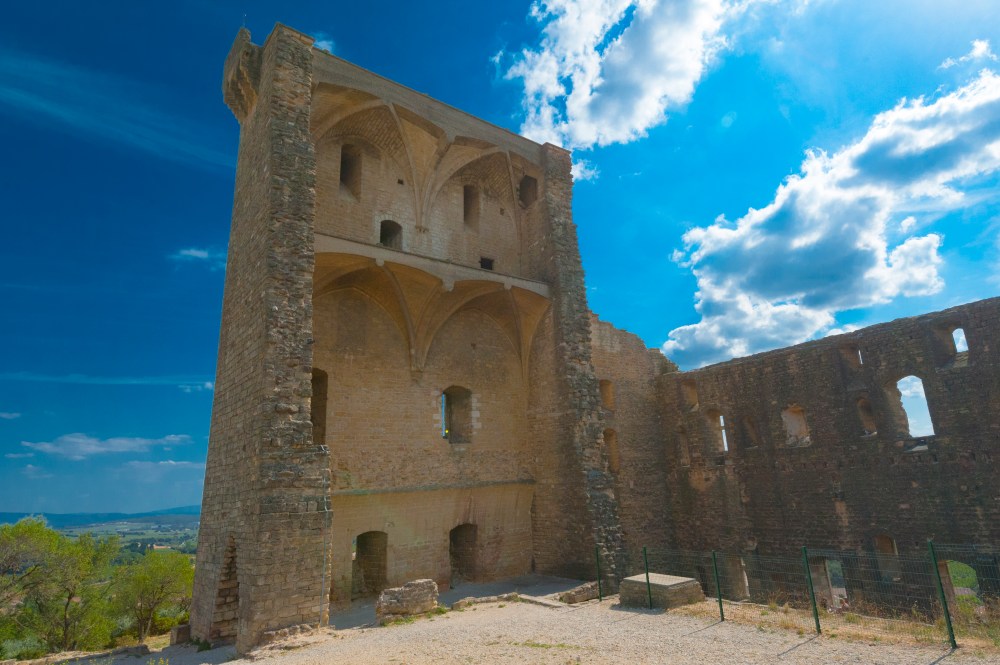
Unfortunately, Châteauneuf’s iconic castle is long past its glory days. Between the devastation during the French Revolution, and the Germans blowing it up during their retreat from the area at the end of the war, there is not much remaining.

Well worn shabby chic from the front and sadly obliterated from the back!
Gigondas AOC
Yet again, another Rhone GSM blend! The rules don’t allow more than 80% Grenache or less than 15% Syrah and Mourvedre, combined, and a minimum ABV of 12.5%. The production rules also mandate that triage be employed during the harvest, discarding imperfect grapes. The remaining grapes are not typically de-stemmed and the maturation period is relatively long so the wines are often higher in tannin and the style is more rustic. A maximum yield of 35 HL of wine per HA of vines is strictly enforced so that the vines are not overcrowded and the growing area is more nutrient dense. This is very different from the Côtes du Rhône AOC, with a maximum yeild of 50 HL per HA, and the Côtes du Rhône Named Villages AOC with a maximum 45 HL per HA.
All these Gigondas AOC rules ensure that the producers focus on the quality of the wine and not the quantity and the wines produced here are outstanding!
Wine has been made in Gigondas since Roman times. The original name of the town was Jocunditas, Latin for “great pleasure and enjoyment” which was fitting since it was the party spot for the Roman II Legion. The land was given to them to settle when they retired from the service. Thankfully for us, they left Hadrian’s wall, quit killing the Celts in Britannia and decided to make wine!
The Gigondas wines are a must try before you die so it’s time to buy one and experience the Holy Trinity Blend at its finest! Who knows, you may never drink Châteauneuf-du-Pape again!
Not to be outdone by its rival, Châteauneuf-du-Pape, most Gigondas wines can also be identified by the embossing on the bottle. The embossing includes ancient Roman symbols like oak leaves and horns to reflect rich history of the settlement.
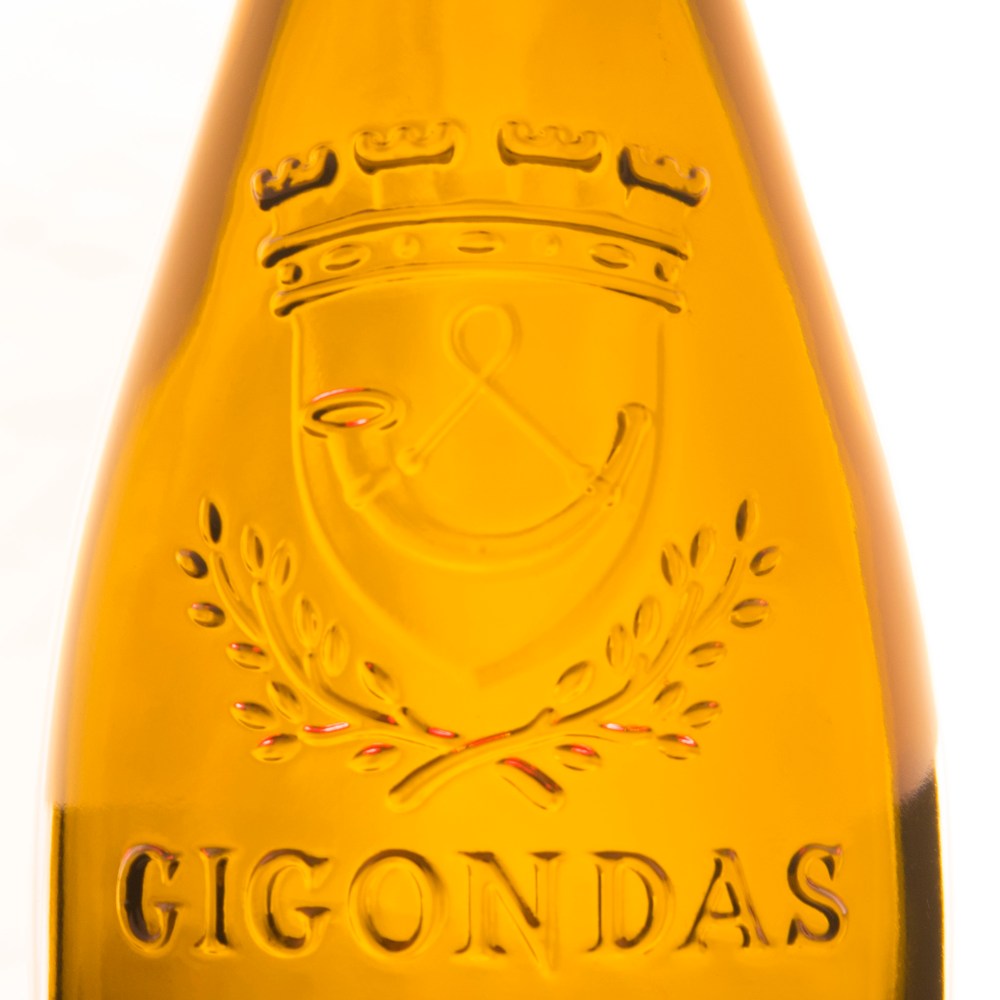

I consider most Gigondas wines to be a much better value than the wines from Châteauneuf-du-Pape. A $40USD Châteauneuf-du-Pape would be an entry level example of that AOC but a $40USD Gigondas would be an outstanding representation from that AOC.
Lirac AOC
Lirac is on the opposite side of the Rhône river from Châteauneuf-du-Pape, but only ~16 miles away. The wines from this AOC are pretty typical of a Rhône GSM with a minimum of 40% Grenache, a minimum of 25% Syrah and Mourvedre combined and a maximum of 10 % Cinsault and Carignan in any combination.
Lirac wine bottles also have an embossed neck depicting what I have deduced is a stylized representation of the Eglise (church) Saint-Pierre.
Lirac is a town of only ~900 people so a very small commune with not much there. The appellation of Lirac actually includes 3 other communes in close proximity. In addition to wine, Lirac is known for the mountain ridge of Sainte-Baume, where Mary Magdalene is said to have spent the last 30 years of her life.
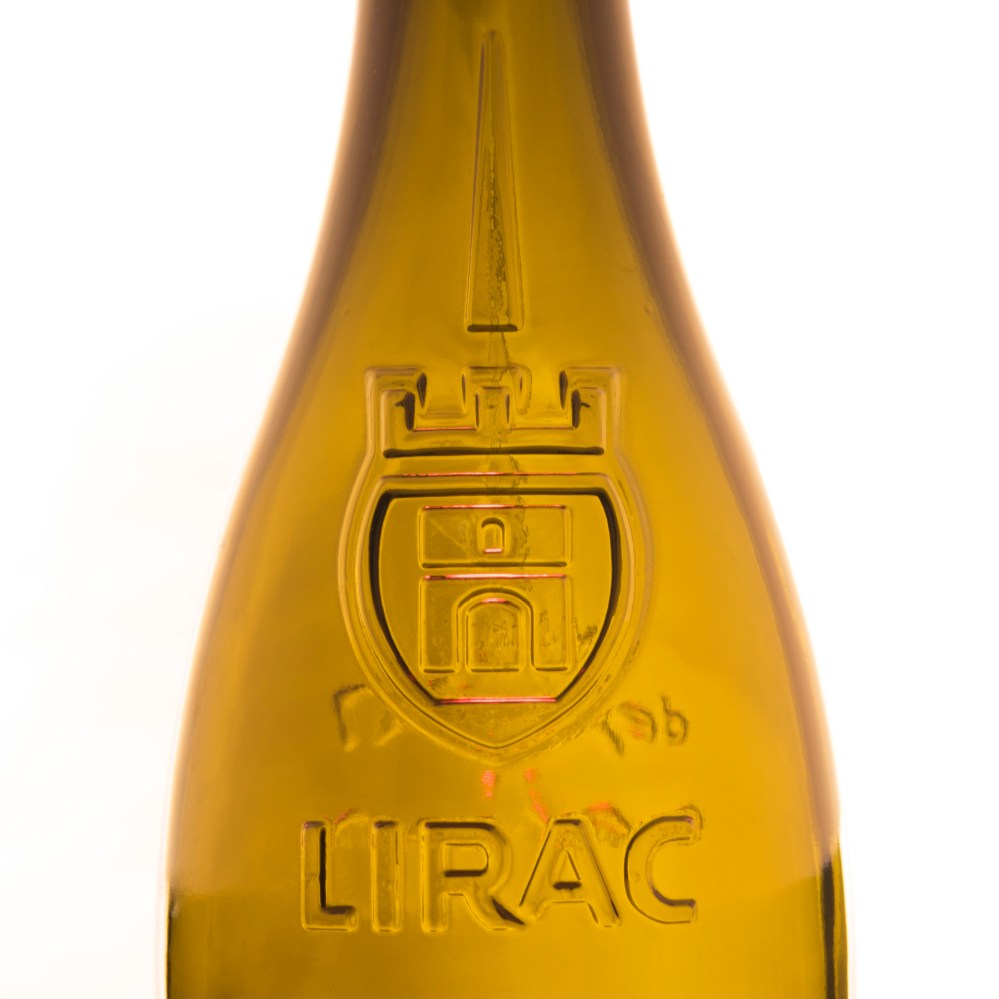
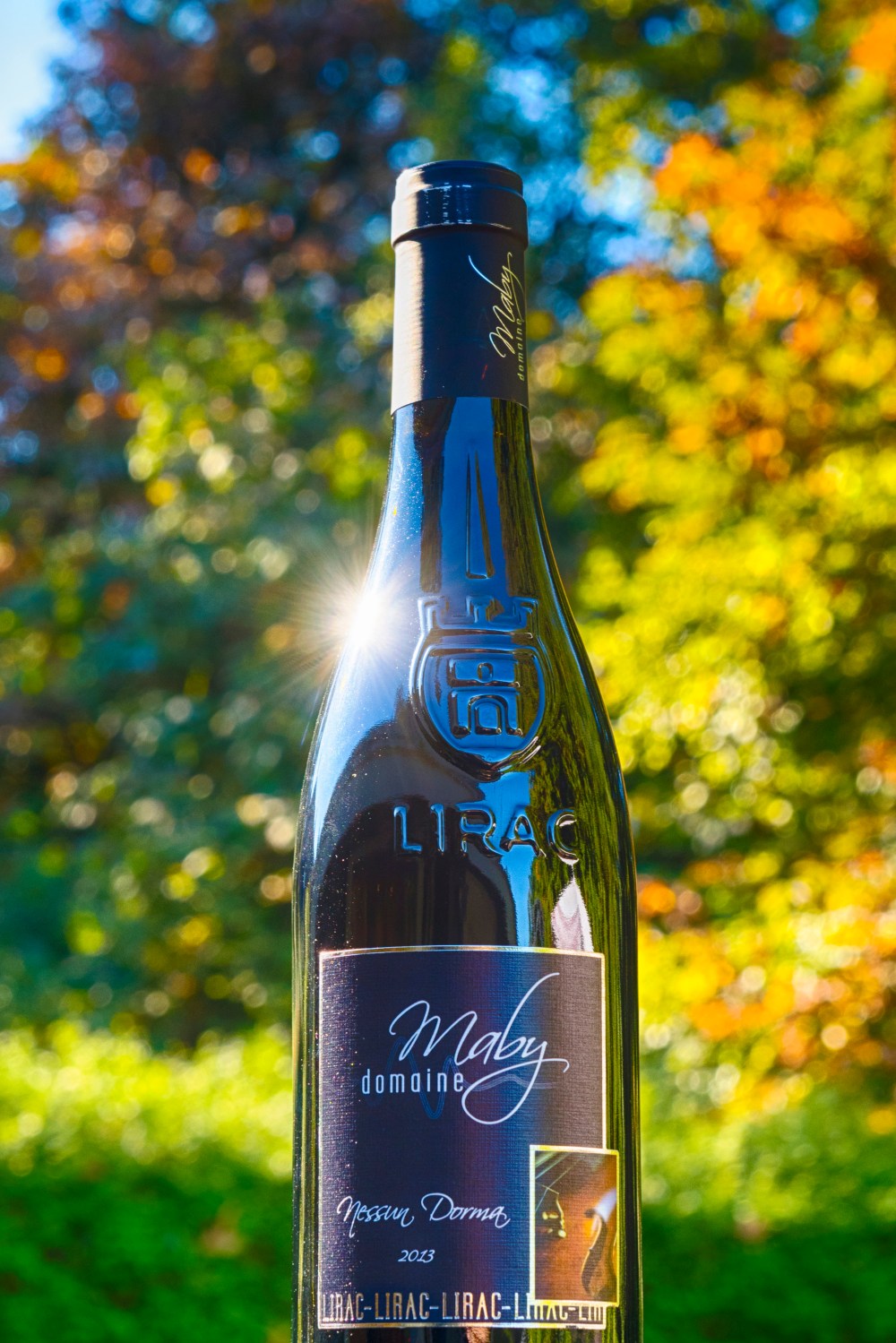
Lirac AOC wines are easily found in North America, with prices ranging from $15USD to $30USD. Any time I see a Lirac I haven’t tried, I grab it as I have yet to meet one I didn’t like! Despite being spendy, these wines represent great value.
Rasteau AOC
I bet you’re not going to believe this but Rasteau AOC red wines are yet another GSM blend! The Rasteau AOC rules dictate a minimum of 50% Grenache, a minimum of 20% Syrah and Mourvedre in any combination, and the balance can be made up of allowable grapes.
Rasteua is also renowned for their Vin Doux Natural dessert wines which was covered in a previous post and the link to that follows:
Wines from Rasteau represent fantastic value in a Southern Rhône Cru as you can typically find them for $15USD to $20USD. Because of this they are definitely a “must try” for all red wine lovers. If you enjoy Rasteau wine, it’s highly likely that you will enjoy all the other Southern Rhône AOCs but you will find that you have to pay a little more for them. Go buy a Rasteau today !

Vacqueyras AOC
Yep, you guessed it, another GSM blend, although the French very rarely tell you the grapes on the label! The Vacqueyras AOC is only a couple miles away from Gigondas and they have been making wine here since the middle ages. They were elevated to Cru status in 1990.
Like Rasteau, the production rules for the Vacqueyras AOC stipulate a minimum of 50% Grenache, 20% Syrah and Mourvedre in any combination and the balance, if any, from other allowable grapes. There is a relatively low maximum yield of 36 HL per HA of vines and this, together with the mandatory removal of imperfect grapes, produces outstanding wines. They are considered by some to be little brother of Châteauneuf-du-Pape which is reflected in the price which typically runs from $20USD to $30USD.

Vinsobres AOC
In the tradition of Southern Rhône, another GSM blend with a minimum of 50% Grenache, 25% Syrah and Mourvedre in any combination and the balance from other allowable grapes. These wines are not as common as other Southern Rhône Cru’s but are well worth a try.
At $15USD to $25USD, these wines represent pretty good value!
The Perfect Rhone Wine Theme
Many of the large Rhone wine producers offer wines from a variety of AOC’s. La Famille Perrin, is a member of the exclusive association Primum Familiae Vini or the First Families of Wine and they have an extensive wine portfoilo from Rhone AOC’s. They produce basic Côtes du Rhône’s, Côtes du Rhône Villages and Cru’s which include the most famous Châteauneuf-du-Papes. I don’t think this group is as secretive as the Illuminati, but it is inspiring they are trying to promote family owned vinyards. As soon as the Robert Mondavi family sold their concern to a corporation they were communicated…ouch !
When doing a French wine tasting with my friends, we like to have wines from the same region and price range but from different AOC’s. That let’s us do a deep dive into the region and experience the subtle differences that come from a range of production rules in different terroires. The Cru level wines below are all from the same producers. They are different AOC’s but have very similar rules, particularly in terms of blend but by tasting them side by side you will notice the subtle differences that might influence you to chose one over another.
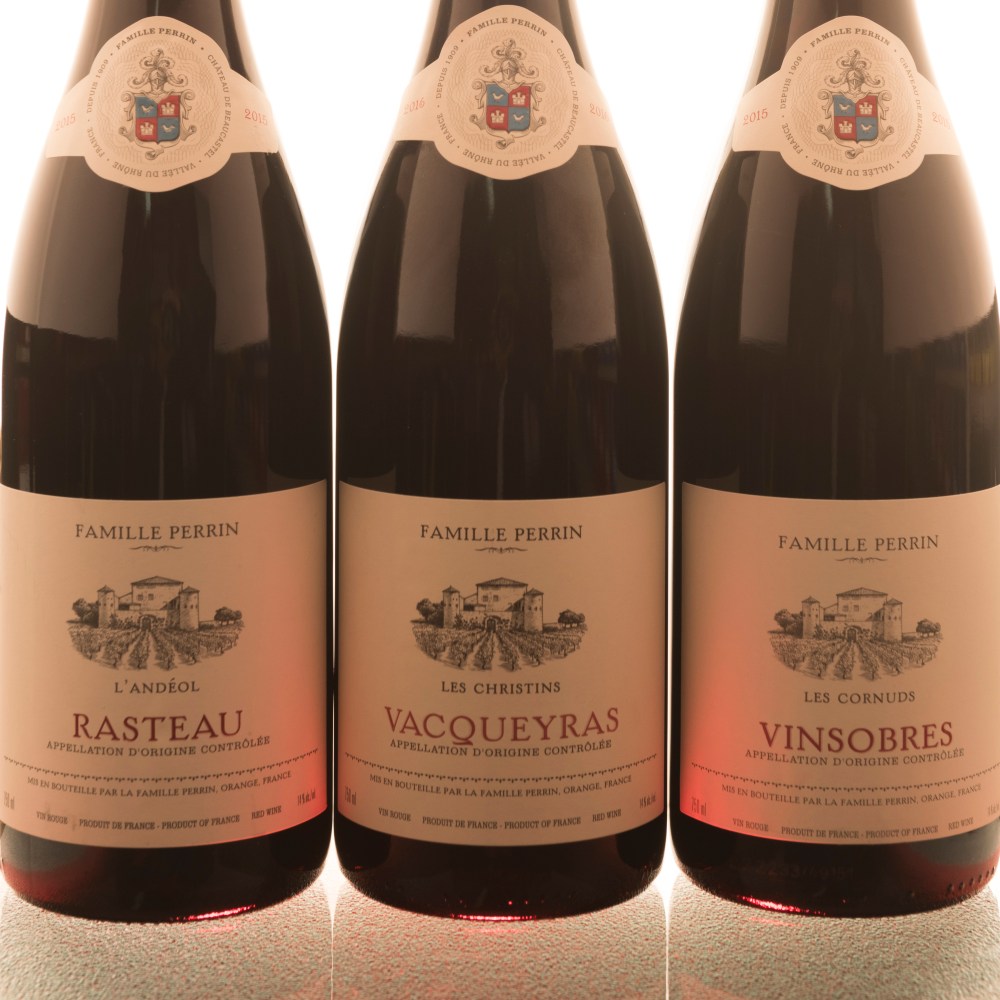
Now I think it’s time to get your wine buddies to pick a wine on theme, pair it with the right munchies and do an all afternoon tasting! How fun is that idea???
Tavel AOC
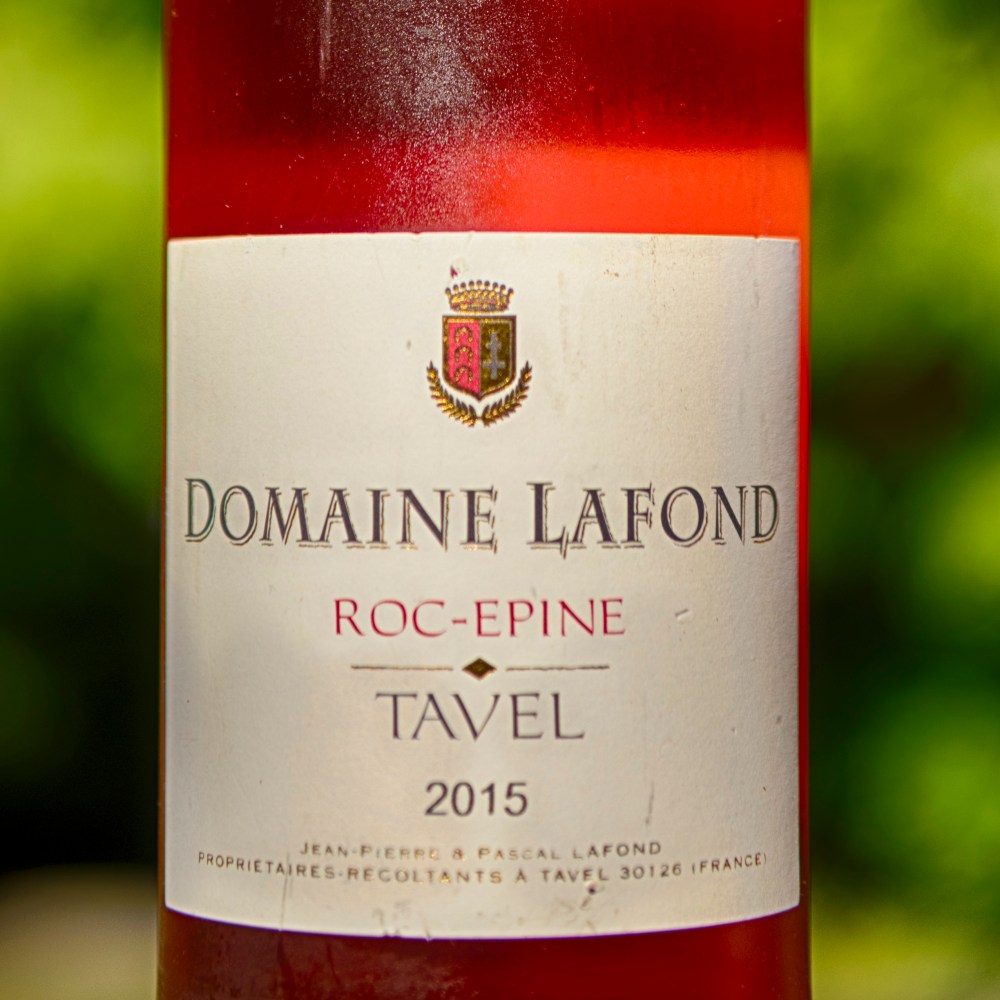
This post has been focused Rhone reds but I would be remiss not to mention the wonderful appellation of Tavel that is famous for their rosé. Although most AOC’s in the Southern Rhone also make rosé wines, Tavel is the only one in France that strictly produces rosé. The wine must be dry, with less than 6 grams of residual sugar per liter, and thank heaven for that, so people who drink that sweet rosé that tastes like Popsicle juice need not apply! The blend is a maximum of 60% Grenache and a minimum of 15% Cinsault and the balance, if any, can be other allowable grapes but typically Syrah and Mouvedre. Certain white grapes are allowed such as picpoul, but it must be co fermented. Rosé is made with red grapes using one of two different methods, direct skin contact or saignée or bleeding method. In Tavel they employ both methods and in some instances they use a combination of the two where they combine the resulting juice from both methods after fermentation.
Direct Skin Contact – The grapes are crushed and the juice only has contact with the skins just long enough for it to pick up some of the color. This maceration time can be as short as 12hours but typically 24 no longer than 48 hours.
Saignée – After the initial pressing of the grapes, some of the juice, say 10% , is bled off for early vinification and the balance of the juice is vinified later resulting in a more concentrated red.
Stay tuned for an upcoming blog post dedicated to Rosé!
Tavel Wine Syndicate says ” In the wine world, there is white, rosé, red and Tavel “. I thought this was a pretty bold statement so I sought out a Tavel and now consider it my favorite rosé. It is truly a rosé for red wine drinkers and I think it’s the only rosé that can easily stand in when the typical pairing would be a red. Give one a go with a steak or burger and see for yourself!
With the prevalence of the light pink Provençal rosé out there, it’s nice to have something different like a Tavel. They are a nice ruby pink, have more body and tannin than a Provence or Languedoc-Roussillon rosé and they are usually less than $20USD.
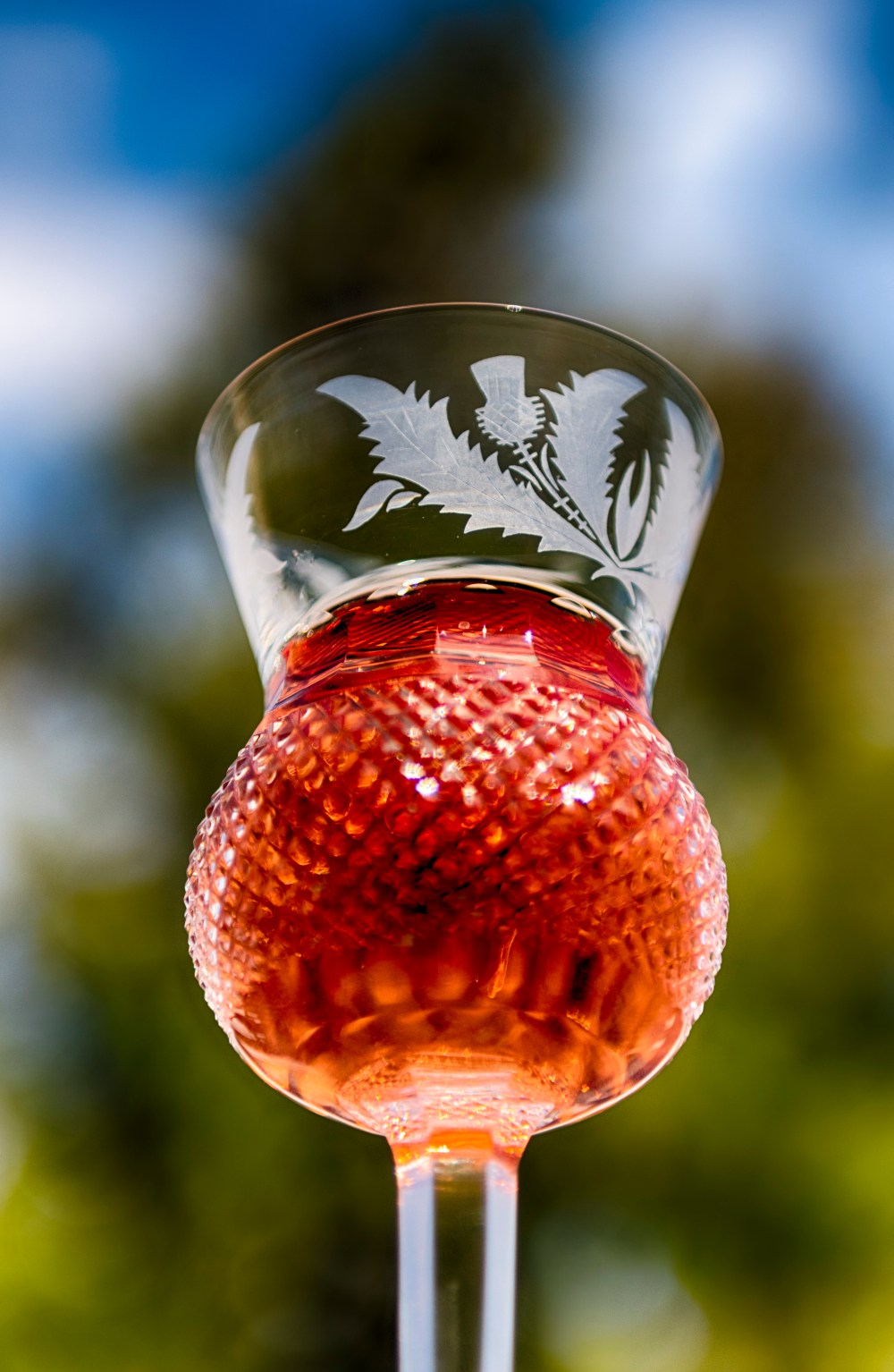
There’s just nothing better than a well chilled Tavel on a sunny afternoon!
Côtes du Ventoux AOC
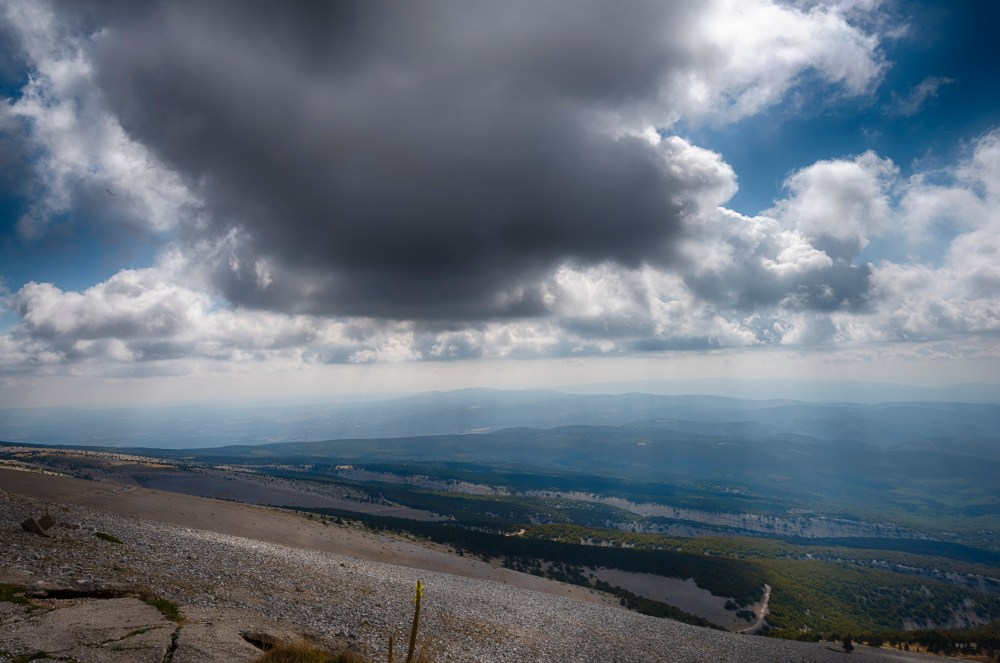
Côtes du Ventoux is at base of Mont Ventoux, between the Côtes du Rhône and Provence wine regions. Mont Ventoux of course is famous for being part of the Tour de France route and a “Hors catégorie” which is a climb that is beyond categorization. Just driving up Mont Ventoux, our poor rental car was screaming away in first gear for over half an hour and I can’t imagine riding a bicycle up!
The wines from the Côtes du Ventoux AOC mainly have the big 3 three grapes, Grenache, Syrah and Mourvedre. They can also have some Cinsaut and Carignan but the rules leave some discretion to the producer.
Technically Côtes du Ventoux does not fall under Côtes du Rhône wine umbrella, but considered a “Other AOC Wine” in the region. Côtes du Ventoux is considered by many to be the poor illegitimate child that no one talks about, and as a result, not as well known outside France. Although they make very good wines, and getting better profile of late, they still can’t command the higher prices. This a good thing for us and makes them a great must try bargain for the region. You can find very drinkable wines for less than $10USD. Move up to $15USD these wines can hold their own against a $20USD Côtes du Rhône.

Southern Côte du Rhône Summary
Out of the 12 wine regions of France the, Rhône wines and specifically those from the South are readily available and cater to every taste and budget. The Southern Rhône is the birthplace of the GSM blend and hopefully you will now know enough to make some pretty fine choices.
Côtes du Rhône AOC and Côtes du Rhône Village AOC are the entry level wines from the Rhone. There are some great buys to be found here so it’s a good place to start your foray into French reds. In other regions, like Bordeaux and Burgundy, the entry level prices are much higher. It should be noted that, the Northern Rhône, which will be covered in detail in future Barley and Vine post, is in stark contrast to the Southern Rhône when it comes to entry level price point as well.
There are fantastic Cru level wines but you may want to start with the Cairanne, Rasteau or Vacqueyras AOC’s. If you enjoy theses GSM blends, and you are willing to pay more, you can move on to the Lirac and Gigondas AOC’s which I think offer better value than the Châteauneuf-du-Pape AOC’s. Although I try to stay away from big opinions, since everyone’s taste and buget is different, my favorite weekend pick from the Southern Rhône on the cost vs enjoyment axis is the Gigondas AOC followed closely by the Vacqueyras and Lirac AOCs. For any special occasion, one of these wines in the $40USD range would be an excellent choice. Remember, just because a wine has a big name it doesn’t mean you will like it better!
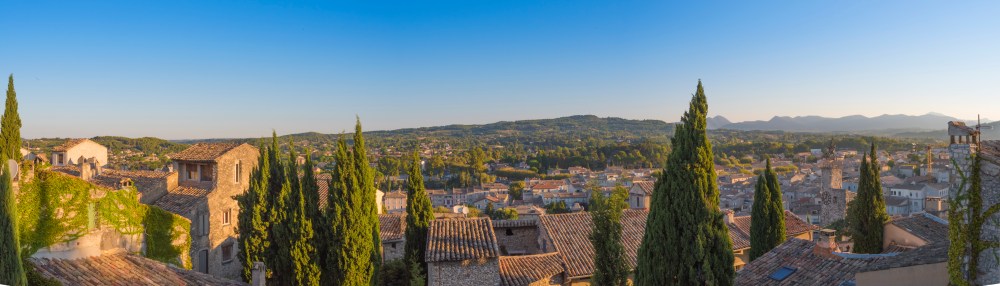
If you’ve never been to France, one of the many picturesque villages in the Southern Rhône would be a great place to stay. One of my favorite places to stay is in the medieval town of Vaison La Romaine which has ruins dating back to the 12th century and one of those wonderful markets France is famous for. The picture at the top of this post is the view from the 500 year old house we stayed in and this is the house. You had to go outside to use toilet since plumbing was retrofitted to the exterior of the stone house. Yeah, sorry too much information !
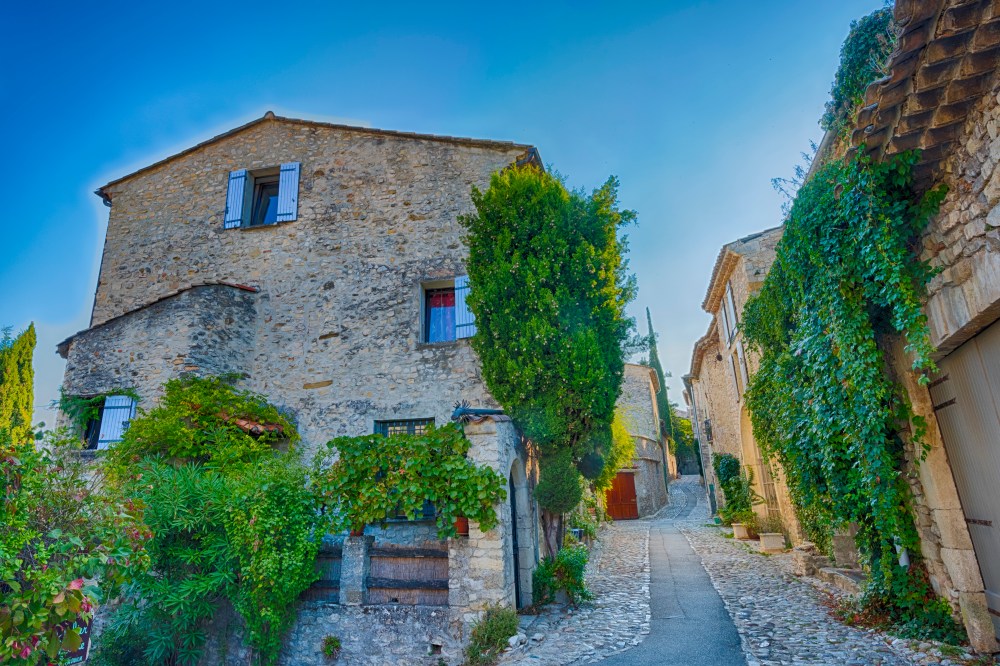
The 12th century Château Comtal is only a 2 minute walk up the path and we sat against the castle wall drinking beer and wine, just because we could !

We spent our days visiting the many different AOCs and neighboring villages like Châteauneuf-du-Pape, Gigondas and Tavel which are only a short a short drive away. Avignon and Marseille are easy day trips and both have lots to offer visitors.
Don’t forget to grab some wine, cheese and a baguette before you head back to the village!
 Barley and Vine
Great new post Ken. Keep them coming … you are educating all of us serious sippers!
LikeLike